


SaaS scale-ups feel the pressure when delivery needs to speed up but local hiring becomes slow and expensive. Senior engineers end up stuck in coordination instead of building. Offshore outsourcing can add delays and communication gaps. That's where Agile nearshore development makes sense—it offers a middle path that keeps teams aligned without slowing everything down.
Nearshore means working with engineering teams in nearby countries and similar time zones, not as a cost play alone but as a way to keep collaboration tight. This article looks at Agile practices inside nearshore development cycles in real SaaS scale-ups—where they truly reduce delivery pressure.
Nearshore Agile Software Development: Specifics for SaaS Businesses
When is nearshore Agile development most wanted? When product and platform work requires continuous interaction between engineering, product, and design, and when decisions need to happen in shared working hours rather than through delayed handoffs. Teams are typically organized as cross-functional squads operating in nearby time zones, which keeps day-to-day communication synchronous.
Nearshore staff augmentation outperforms in-house teams when hiring limits slow delivery. It outperforms offshore models as well—when work requires constant collaboration and changing requirements. Time zone overlap and fewer cultural differences make decisions faster. The advantage shows up in areas like:
- ongoing backlog refinement
- mid-sprint priority changes without resetting delivery plans
- real-time product and architecture discussions
- shared ownership across roles
Benefits of Nearshore Agile Software Development for SaaS Scale-ups
Agile nearshoring is all about stabilizing delivery—especially as teams grow and roadmaps keep shifting.
Enhanced Communication
Among the many benefits of IT staff augmentation, the most practical one in nearshore setups is that they work your hours. Because the time zones and work cultures match up, developers and business teams can actually talk to each other in real-time. Product owners, engineers, and stakeholders can resolve issues during the same workday. This shortens feedback loops too.
Cost Efficiency
This approach is more cost effective than expanding senior teams locally, especially when the market for experienced developers is tight.
Take Stockholm as an example: growing an engineering team in such a tech-dense city is often too expensive due to talent scarcity and high social overhead. But—use established tech hubs like Kyiv or Lviv instead, and you'll access a vast pool of senior talent at roughly 60% of the cost. While a full-stack developer in Sweden might cost €90k annually (including taxes), a comparable Ukrainian contractor provides the same output for €55k.
The savings come from execution efficiency—moreover, costs stay predictable because teams are not rotated per project.
Need senior nearshore talent that delivers from day one?
Flexibility & Speed
Sprint planning includes nearshore engineers who understand the product. This means when priorities change during a sprint, they can adjust immediately instead of waiting for the next cycle to start. You also skip the months of hunting for local talent; these engineers can jump in and start contributing right away.
Since they're geographically close, it's much easier to keep everyone in sync. You get the flexibility of a remote setup without feeling like you've lost control.
Improved Quality
Product quality improves when software developers stay on the same project from sprint to sprint and build context over time. Code reviews happen in real time. Problems show up earlier, when they're cheaper to fix.
Nearshoring supports this by widening access to skilled engineers when local hiring stalls, with Eastern Europe alone accounting for over 1 million software developers in the market. Physical proximity still matters (even though we are used to remote work), especially at critical moments, and nearshore locations make in-person kickoffs and problem-solving sessions realistic due to short and affordable travel from major hubs.
Scalability
A dedicated nearshore team lets SaaS scale-ups add or remove engineers without changing internal roles.
Teams expand when the roadmap demands more features and shrink when priorities drop: you easily scale a software development team and your development process doesn't need rebuilding each time.
Agile Definition For Product And Platform Teams
Agile software development nearshore means cross-functional teams work in short cycles and stay close in time. Limited time difference keeps feedback fast and decisions shared, unlike offshore setups with long delays.
Work moves in sprints with regular checkpoints for feedback and adjustment. Teams adapt priorities as they go rather than following a fixed plan. This supports steady delivery, catching issues early, and improving continuously, with progress visible to stakeholders every cycle.
Agile vs. Waterfall In Scale-Ups
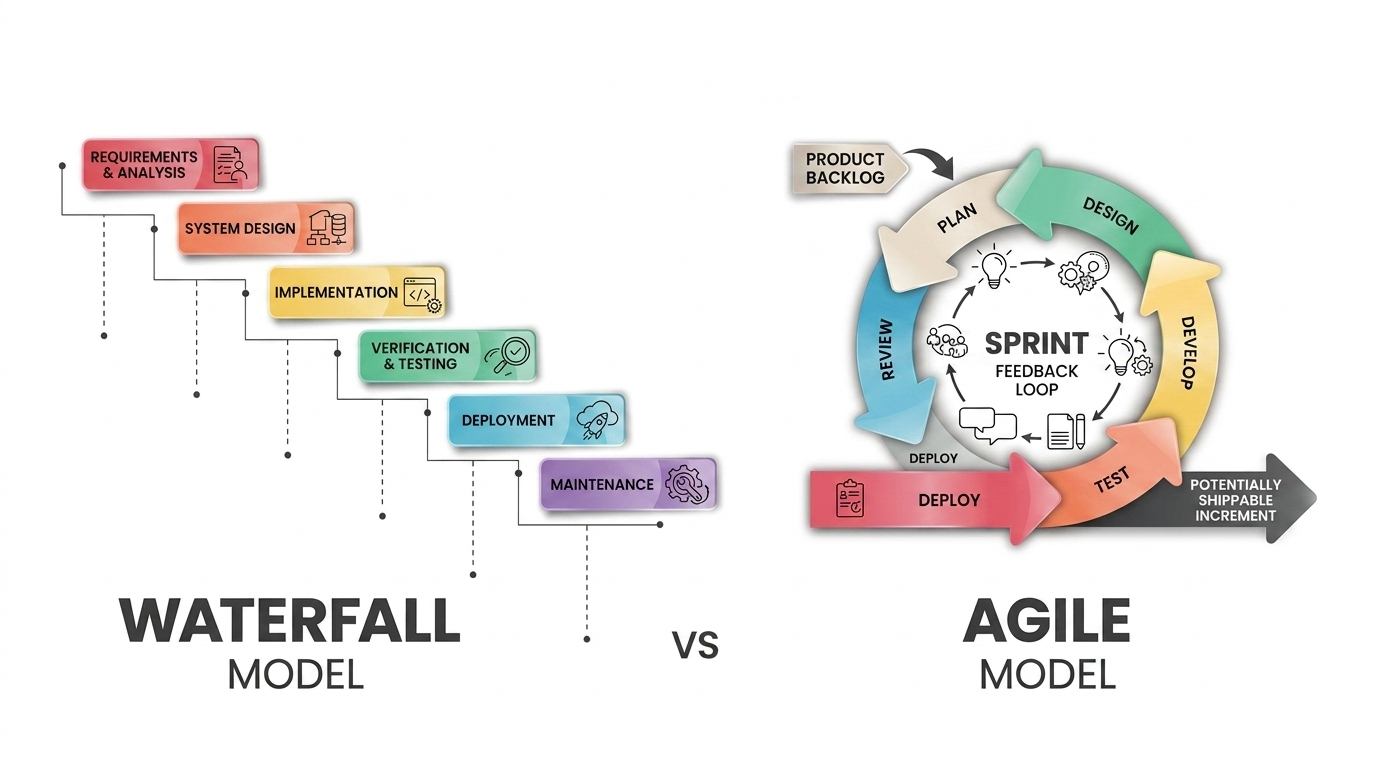
Waterfall splits projects into rigid phases—design, build, test, release. Changes late in the cycle are costly. Scale-ups face fast-shifting roadmaps, so waterfall often slows delivery and stretches tech talent thin.
Agile, by contrast, handles evolving requirements in real time. Teams plan, implement, and review in short iterations. Decisions are made as the product grows, not before it starts.
Where Agile Fits Best For Product Roadmaps
Agile is great when features evolve during development, when teams need frequent feedback, and when there are multiple remote teams that contribute to the same product.
It suits roadmaps that may shift with market input, customer feedback, or internal strategy changes. Features can be reprioritized mid-sprint—while delivery is not shifted. What Agile means in practice:
- Faster response to changing priorities
- Continuous feedback loops with stakeholders
- Clearer visibility into progress and blockers
- Stable product quality across iterations
Agile Principles That Protect Nearshore Development Roadmap Delivery
When delivery is split between internal and external teams, roadmap risk comes from delays, rework, and slow recovery, not from geography. Agile nearshore software development protects the roadmap only when a few principles are treated as non-negotiable and enforced across the same tooling, pipelines, and quality standards.
Working Software Over Activity
Progress is measured by deployable code, not how many tickets are closed. Small batches move through the system quickly, reducing lead time and avoiding long-lived branches that stall integration. Frequent deployment keeps the roadmap fluid and exposes problems before they accumulate.
Fast Feedback Loops
Feedback needs to come in while the work is still fresh. Code reviews, testing signals, and production metrics should be shared in near real time so teams can fix things right away. This kind of fast feedback often makes a real difference in the outstaffing vs. outsourcing decision, because with it teams can respond and improve really quickly. It keeps throughput steady and prevents rework from quietly draining roadmap capacity.
Single-Threaded Ownership
Each roadmap item has one owner responsible from build to release and recovery. Internal teams and the nearshore Agile team share accountability for outcomes, including rollback paths and incident response. Recovery is treated as part of the same workflow, not a handoff to another group.
Backlog Discipline and Readiness
Only work that is technically and operationally ready enters a sprint. Dependencies, rollout plans, and risk controls are resolved upfront. This way, half-finished features do not block deployment queues and distort delivery forecasts.
Definition of Done With Quality Gates
"Done" includes stability. Features are not considered complete until they meet agreed reliability thresholds and show low failure risk in production. At release time, you're getting high quality and don't push fixes into unplanned follow-up work.
Limit Work in Progress
Teams cap parallel work to protect flow. Too many active items increase context switching and delay recovery when something breaks. Fewer items moving faster keeps deployment frequency high and failure recovery short.
Forecast with Delivery Data
Roadmap commitments are based on actual throughput, failure rates, and recovery time collected from CI/CD and monitoring systems. Estimates follow evidence. This grounds delivery planning in reality because constraints are exposed before they turn into missed milestones.
Agile Nearshore Development Operating Model for B2B SaaS Scale-ups
For a COO, the question is not what is nearshore Agile software development in theory. The question is how to design an operating model that absorbs external capacity without losing control over roadmap delivery, quality, and accountability. It works well when structure, ownership, and metrics are explicit from day one.
Looking for external developers who operate like an internal squad?
Team Topology: Squads, Platform, and Enablement Ownership
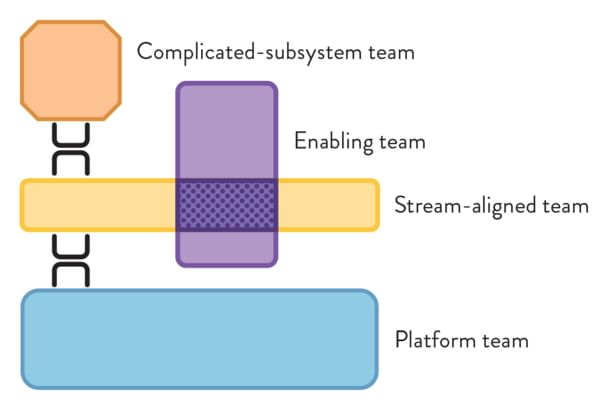
The core unit is a small cross-functional squad with full-stack responsibility. Frontend, backend, and QA are not separated. Each roadmap item has a single Dedicated Responsible Person who owns build, release, and fixes. That ownership applies whether work is done by internal engineers or a nearshore partner.
Platform teams own shared infrastructure, CI/CD pipelines, observability, and internal tooling. They provide a single path for deployment so squads do not create parallel environments. This prevents fragmentation as capacity scales.
Enablement teams focus on standards, automation patterns, and best practices. They review how squads work, not just what they ship. Their job is to remove friction and drive continuous improvement across both internal and nearshore squads.
Roles And Accountability Across Product And Engineering
Product managers own outcomes. Their goals link to roadmap impact, release stability, and adoption metrics. Engineers operate as full-stack contributors who can move across layers when required.
Nearshore engineers are not treated as external executors—instead, they are embedded into squads as equal team members. In software development team extension accountability is shared through common SLOs, code review standards, and production metrics. Performance is evaluated through shipped value, failure rates, and recovery speed; activity volume is not an indicator here.
Why is clear ownership essential? It reduces misunderstandings. Every release has one accountable lead. Every service has defined reliability thresholds. Escalation paths are predefined, not negotiated during incidents.
MaybeWorks XXX Expert Advice:
My advice: don't treat external teams as just extra hands. In SaaS scale-ups, every release needs a clear lead, each service should have defined reliability thresholds, and escalation paths must be agreed on ahead of time. Focus on outcomes that move the product forward, not how busy the team looks. That's the difference between predictable roadmap progress and constant firefighting.
Ceremonies That Add Value For Delivery
Sprint planning focuses on scope clarity and technical readiness: backlog items enter a sprint only when dependencies and rollout plans are clear.
Real-time collaboration and shared tooling in nearshore Agile software development allow parallel work without branching chaos. Code reviews include automated checks before human review to reduce noise and improve signal.
Retrospectives focus on measurable changes in lead time, failure rate, and rework. Impact reviews connect sprint output to project outcomes, including stability and customer-facing performance.
If a ritual does not improve throughput, reduce instability, or clarify ownership, it is removed.
Agile Nearshore Development Lifecycle: From Idea to Production Flow
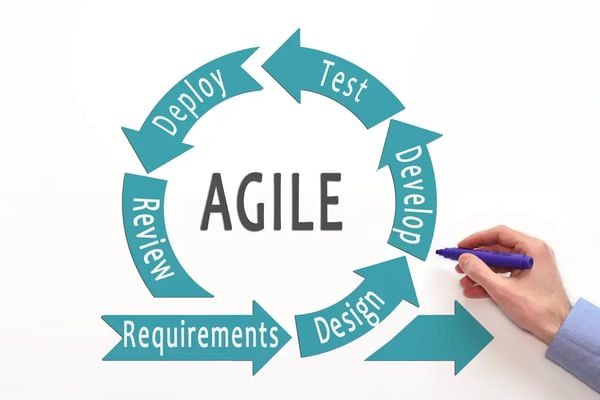
In a scale-up, every product decision competes for limited engineering capacity. When relying on Agile nearshore software development services, the real risk is misalignment—not coding speed. A structured lifecycle reduces that risk.
The process typically unfolds in five stages: discovery, planning, build, release validation, and production feedback.
Stage 1: Discovery And Alignment On Outcomes
Work starts only after expectations around impact are explicitly defined. Before engineering starts, the team clarifies the target metric, constraints, and main risks. That discipline limits mid-sprint scope changes and avoids avoidable rework.
Discovery should include both product and engineering expertise, including nearshore contributors. Involving engineering early reveals technical limits before they disrupt execution. One person must own the business outcome at this stage.
Stage 2: Planning And Backlog Design
Planning decides what actually gets built first. Work is broken into pieces small enough to ship and test in production. Large initiatives are split so they can deliver value without waiting for everything else to be finished.
For teams that manage remote development teams, dependencies must be surfaced early. If integration risks or platform limits appear after sprint start, delivery slows. Capacity stays fixed; scope adapts within it.
Stage 3: Build In Sprints Or Flow
Execution follows an iterative approach, but structure depends on the work. Product initiatives usually run in sprints with a defined goal. Infrastructure and support streams often move in continuous flow.
Work-in-progress is capped to prevent context switching and protect release frequency. Nearshore engineers are embedded in squads, contributing architectural expertise and participating in decisions.
Progress is measured by what reaches production in usable form.
Stage 4: Testing And Release Readiness
Testing runs continuously alongside development. Automated validation, peer reviews, and integration checks run as part of the workflow—they make the system stable. Before release, the team verifies monitoring coverage, rollback options, and operational readiness. In distributed setups, these controls reduce coordination challenges and prevent avoidable incidents.
A release moves forward when risk is acceptable for the business, not simply because the date arrived.
Stage 5: Deployment Feedback And Iteration
Once deployed, the focus shifts to results. The team tracks adoption, performance impact, and failure rates against the original target. If the data does not support the expected outcome, priorities are adjusted.
Continuous feedback keeps the system honest. Over time, this discipline improves predictability and helps distributed teams operate with fewer surprises and less coordination overhead.
Metrics a COO Can Trust for Nearshore Agile Development

A COO needs metrics that show what actually happens. In setups with distributed nearshore teams, the focus should be on delivery, product results, and quality. Data must come from automated CI/CD and monitoring systems; self-reports or manual scoring don't count.
Delivery Health: DORA Metrics and Cycle Time
Throughput is tracked via deployment frequency, lead time for changes, and failed deployment recovery time. Multi-team setups require unified pipelines, shared feature flags, and joint rollback plans so metrics reflect the system, not a single squad. Work-in-progress limits help maintain lead time and deployment cadence.
Key levers to protect roadmap delivery:
- Minimize lead time and ship in small batches
- Embed nearshore teams in release ownership
- Keep recovery paths joint and rehearsed
Product Health: Adoption, Activation, Retention, Churn
Metrics should show whether features reach users and solve real problems. Adoption and activation indicate immediate engagement. Retention shows sustained value. Churn signals misalignment between roadmap expectations and outcomes.
Nearshore squads must participate in reviews so gaps are detected early.
Quality and Risk: Escapes, Rework, Incidents, Security
Stability metrics track change failure rate, rework, and incidents while internal and nearshore teams use shared SLO dashboards to maintain consistent risk standards. Cross-team AI code reviews catch unplanned fixes before they reach production, and security checks run continuously to prevent last-minute issues.
Forecasting with Honest Capacity and Probabilistic Dates
Forecasts must reflect real throughput, known constraints, and historical WIP. Probabilistic windows give executives visibility without overcommitting teams. The best strategy is to adjust predictions as capacity, dependencies, and technical risks evolve.
Experience shows that disciplined metric tracking in nearshore setups reduces surprises, optimizes resource allocation, and keeps multi-team delivery predictable for scale-ups. Partner with MaybeWorks to turn your nearshore metrics into reliable, actionable insights.
Common Scale-up Challenges Nearshore Agile Software Development Can Fix
SaaS scale-ups often ship features that break quickly, backlogs balloon, roadmaps stall, and stakeholders stop trusting dates. Nearshore Agile practices and disciplined governance address these executive-level risks without adding ceremony.
We Ship But It Is Fragile Tech Debt
Fragmented toolchains—most teams run seven or more DevOps tools—make pipelines brittle. Unintegrated stacks create errors, and manual security checks slow fixes. Even when features ship, instability and tech debt mount. Nearshore squads embedded in unified pipelines support incremental modernization and reduce fragility.
Everything Is P0: Backlog Inflation and Priority Noise
Unclear priorities compound delivery problems. Security fears stop collaboration for 27% of teams, 63% of untested code sits waiting in queues, and approvals through compliance networks turn every task into an urgent fire drill.
Nearshore Agile teams enforce structured backlog discipline and explicit priority rules, aligning work with roadmap goals and avoiding constant P0 chaos.
Teams Are Busy But Roadmap Is Not Moving
Time spent juggling logins, dashboards, and disconnected tools eats into productive hours. IT layoffs and burnout slow actual progress even when teams appear busy. Embedding nearshore squads adds capacity without changing internal structures, letting teams concentrate on moving the roadmap. Teamwork across distributed squads turns velocity into real results instead of just activity.
Stakeholders Do Not Trust Delivery Dates
Projects often slip by four months or more, wasting over $100k per organization. When visibility is fragmented, stakeholders stop trusting delivery dates.
Progress becomes visible and roadmap commitments predictable through:
- unified API-first pipelines,
- embedded security at every stage, and
- incremental releases that measure success.
Agile Nearshore Development Teams For Capacity And Control

Scale-ups extend engineering capacity with nearshore Agile software teams without losing control over priorities, quality, or security. Nearshore setups rely on overlapping time zones, cultural alignment, and disciplined collaboration to reduce risks.
Nearshore vs. Offshore For Scale-Ups Risk
Nearshore vs offshore software development shows a clear trade-off. Nearshore teams with 4–8 hour overlap cut misunderstandings by roughly 40%, keeping scope aligned and IP secure. Offshore work may be cheaper—but, long time gaps increase miscommunication, delayed feedback, and scope drift.
Why Agile Works Better With Overlapping Time Zones
Real-time interaction accelerates development. Standups, pair programming, and immediate code feedback shorten iteration cycles by about 2x compared with asynchronous offshore handoffs. Decisions happen while the workday is live for both internal and nearshore squads, making Agile principles practical instead of theoretical.
Team Models: Dedicated, Augmentation, Hybrid
Scale-ups choose team structures based on needs:
- Dedicated Squads: Full nearshore teams own features end-to-end, ideal for Agile delivery.
- Staff Augmentation: Nearshore developers fill internal skill gaps without reshaping squads.
- Hybrid: Core internal team plus nearshore QA or back-end staff; shared tools maintain consistency.
Each model increases capacity while keeping roles, responsibilities, and project management workflow visible to the teams working on the project.
Nearshore Agile Software Teams Daily Operating Rhythm
Daily rhythm blends synchronous and asynchronous work. Typical cadence: 9AM client standup, 2PM nearshore standup, async updates via Slack or Jira, weekly in-person OKRs. Roughly 80% overlap fosters trust, speeds decision-making, and ensures benefits of nearshore collaboration translate into real outcomes.
Rollout Playbook for Agile Nearshore Software Development
Scaling or resetting software development nearshore Agile works best when delivery, governance, and tools are aligned before work ramps up. Without shared expectations, even experienced teams stall.
Pre-work: Align on Outcomes, Constraints, and Definition of Done
Start by defining shared OKRs, technical priorities, and business goals. Decide on a Definition of Done that includes tests, documentation, and SLIs so everyone knows when work is complete. Run pilot projects to test whether internal and nearshore squads can collaborate effectively.
Clear role assignment—Product Owner, Scrum Master—prevents scope drift and ensures accountability. Early alignment reduces misunderstandings and keeps roadmap items realistic.
Tooling Baseline: Boards, CI/CD Pipelines, Quality Checks, and Observability
Choose standardized tools for task tracking and communication—Jira, Trello, Slack, Zoom. Unified CI/CD pipelines avoid handoff friction. Integrate automated quality checks and observability dashboards so all teams see the same data.
This makes progress transparent, reduces errors, and surfaces risks early. Teams in different locations can act on the same signals rather than relying on memory or emails.
Regular Updates: Demos, Release Notes, Exec Check-ins
Daily standups happen in overlapping hours. Some updates are async, some require live demos. Release notes sit in shared repos, ready for anyone to check. Sprint reviews and retrospectives focus on actual impact, not just finished tasks. Weekly exec check-ins track roadmap progress and business outcomes.
That is, IT staff augmentation services slot in seamlessly, handling work without slowing internal squads or creating extra coordination.
Hiring Or Partnering For Nearshore Agile Teams

Scaling with nearshore teams means finding people who can genuinely execute Agile methodologies. The right team delivers consistent velocity in 2-week sprints, handles Scrum or Kanban in practice, and meets metrics like high deployment frequency and low failure rates.
What Agile Experience Actually Means In Practice
Proven Agile experience isn't about certifications alone. It shows up in consistent story completion, measurable throughput, and real-world delivery across businesses similar to yours.
Teams should demonstrate cross-timezone execution and a record of meeting sprint goals without repeated firefighting. Past velocity reports, defect metrics, and client references are more telling than a resume. Turn to MaybeWorks if you want a nearshore partner that actually delivers.
Interview And Selection Checklist For Agile Teams
What steps actually ensure your partnering IT outstaffing company isn't just promising Agile but delivering it reliably? When evaluating candidates or partners, look for evidence that aligns with delivery expectations:
- Sprint demos from prior nearshore projects
- Agile certifications (CSM, SAFe) plus relevant code samples
- Test calls to confirm effective collaboration across time zones
- Historical velocity and defect KPIs from the last 6 months
Contract Must-Haves for Nearshore Agile Delivery
Contracts set the rules for who's responsible and keep your roadmap on track. Key points to cover include:
- Clear IP ownership and rights
- Sprint goals with measurable velocity and delivery SLAs
- Short exit clause (e.g., two sprints) with knowledge transfer
- Defined escalation paths and daily standup cadence
Pilot Project To Prove Fit Before Scaling
A short trial shows how the partnership works in reality. Run two sprints, track velocity, defects, and cycle time. Use shared Jira boards and Loom demos to keep work visible. Success in the pilot is crucial—it proves your IT staff augmentation services or nearshore partner can scale without disrupting ongoing delivery.
Agile Nearshore Software Development Trends That Matter to COOs
For SaaS scale-ups, COOs need to focus on practices that improve customer satisfaction, accelerate delivery, and reduce risk. Nearshore teams are increasingly part of this picture, but how they work must evolve with the latest development trends.
Hybrid Agile At Scale With Scrum, Kanban, DevOps
Scale-ups are mixing Scrum and Kanban across squads and folding in DevOps practices. This hybrid setup keeps nearshore teams in sync with internal squads and lets priorities shift smoothly. The roadmap is moving without adding extra coordination headaches.
AI In Delivery For Automation, Testing, Code Review
AI-assisted workflows are great: they help nearshore teams automate repetitive tasks, run continuous testing, and flag potential issues early. Using AI in development, testing, and code review helps teams move faster and catch mistakes early—without taking human judgment out of the loop.
Security By Default With DevSecOps Practice
Security is no longer a step at the end—it's built into every sprint. Observability, automated scans, and compliance-aware release gates mean that nearshore teams deliver features safely and reliably, protecting both customers and the business.
To stay competitive, COOs need nearshore Agile teams that can move fast, keep quality high, and handle security from day one. Picking the right partner makes every release count. MaybeWorks helps you scale with skilled nearshore teams while keeping delivery and outcomes under control.
Frequently Asked Questions on Agile Nearshore Development
1.How do we keep nearshore Agile software development predictable for revenue planning?
2.In nearshore Agile software development, which framework should we use: Scrum or Kanban?
3.What nearshore Agile software development metrics should be tracked weekly?
4.How do we run nearshore Agile software development across product and platform teams?
5.How do we integrate nearshore developers into squads for nearshore Agile software development?
6.What are the biggest mistakes scale-ups make with nearshore Agile software development?
7.In nearshore Agile software development, how long does it take to see real outcomes?
8.How do we maintain quality while increasing velocity in nearshore Agile software development?


Share


